
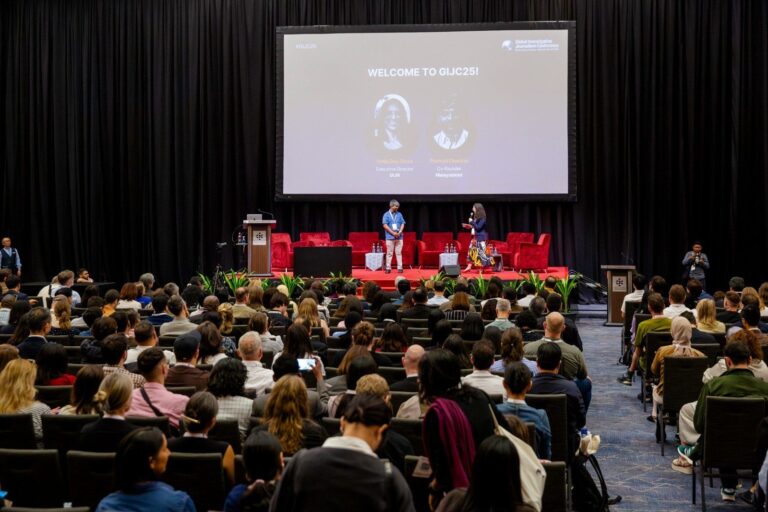
The 14th Global Investigative Journalism Conference (GIJC25) brought together reporters, editors and media builders from across the world to Kuala Lumpur this November, and Reference members were there in force to share skills, ideas and new collaborations. Set against the backdrop of Malaysia’s capital, the conference underlined why cross‑border, independent public‑interest journalism remains essential – and how this community is adapting to new political, financial and technological pressures.
GIJC25 gathered investigative journalists from well over a hundred countries for five days of panels, workshops and informal meet‑ups, with a strong focus on data, accountability reporting, climate, corruption, AI and safety. Sessions ranged from hands-on training in mapping, scraping and satellite imagery to discussions about how to investigate algorithmic systems, oligopolies in the pharmaceutical industry and the global water crisis. The result was a rare moment when reporters working on similar stories in very different contexts could compare methods, align future projects and build practical solidarity.
Reference at GIJC25
Reference members were visible across the programme, not only as participants but as speakers, moderators and convenors helping shape conversations on cross‑border collaboration, sustainability and newsroom leadership. Arena for Journalism in Europe founder Brigitte Alfter joined the high‑level panel “Editorial Leadership Best Practices for Cross‑Border Collaborations,” underlining the need for clear governance, trust‑building and shared decision‑making when working across languages and legal systems. Correctiv Editor‑in‑Chief Justus von Daniels moderated the same session, highlighting lessons from large‑scale European collaborations and reflecting on how to make such projects genuinely inclusive and impact‑driven. Their impromptu café with give-away books from their investigations also served as a networking spot during the conference.
Across the programme, representatives of several member newsrooms shared practical experience from their organisations. Civio’s Eva Belmonte spoke on “Unlocking Investigations Into Government Procurement,” drawing on years of work exposing opaque contracting in Spain. Oštro founder Anuška Delić appeared in sessions on training new generations of investigative journalists and using spreadsheets in investigations, sharing approaches from the cross‑border newsroom she leads in Slovenia and Croatia. From Disclose, Deputy Editor-in-Chief Pierre Leibovici joined panels on engagement and audience revenue, discussing how the French non‑profit involves readers in climate and labour‑rights investigations.
Learning, teaching and sharing tools
For many in the Reference network, #GIJC25 was a chance to test and refine approaches first developed within a European context and now increasingly relevant globally. Members joined sessions on rebuilding trust with audiences, human‑centred design for investigations, safety and security, and the nuts and bolts of collaborative project management, often contributing examples from their own cross‑border work. Panels on investigating data‑scarce contexts, uncovering religiously linked abuses and tracking complex financial and pharmaceutical power structures resonated strongly with the kinds of stories Reference members are already pursuing across the continent.
Workshops supported by partners such as the Pulitzer Center and other networks looked at investigating AI systems, mitigating tech risks at borders, and using open‑source tools to trace money, influence and environmental harm. These exchanges offered concrete takeaways, from new methodologies and security practices to potential mentors and collaborators, that participants are already feeding back into their newsrooms and, by extension, into the Reference Circle itself.
Coverage of GIJC25 from outlets in the host country and beyond has emphasised how the conference serves as both a skills‑sharing platform and a barometer of the state of investigative journalism worldwide. For Reference, the week in Kuala Lumpur reinforced the value of staying plugged into these international conversations: every encounter brought fresh perspectives on how independent public‑interest media can be funded, governed and connected, and how this network can keep supporting its members as they investigate the issues that matter most to their audiences.